There is a point in most ServiceNow programs where things begin to feel heavier than expected. The roadmap fills up, requirements expand, and what once felt like a clear path forward starts to blur under the weight of competing priorities.
It is often in that moment that architecture enters the conversation, sometimes as a solution, sometimes as a corrective measure, and sometimes simply as a last attempt to bring structure to growing complexity.
For Miguel Rios (he prefers “Mike”), Director of Architecture for the CoreX Center of Excellence and a Certified Master Architect, that moment is not where architecture should begin, but it is where its purpose becomes most visible. In his experience, the challenge is not a lack of ambition or effort. It is a misunderstanding of what architecture is meant to do.
“People often think architecture will deliver anything they want,” Mike explains. “I prefer to frame it as helping you design what you really need to deliver something sustainable and valuable to the business.”
From Complexity to Clarity
That distinction carries through the way he approaches his work and reflects a shift that has taken shape over the course of his career. Earlier on, complexity itself felt like a marker of success, something to be pursued and refined. Over time, that perspective gave way to something more grounded, shaped by the realities of delivery and long-term system health.
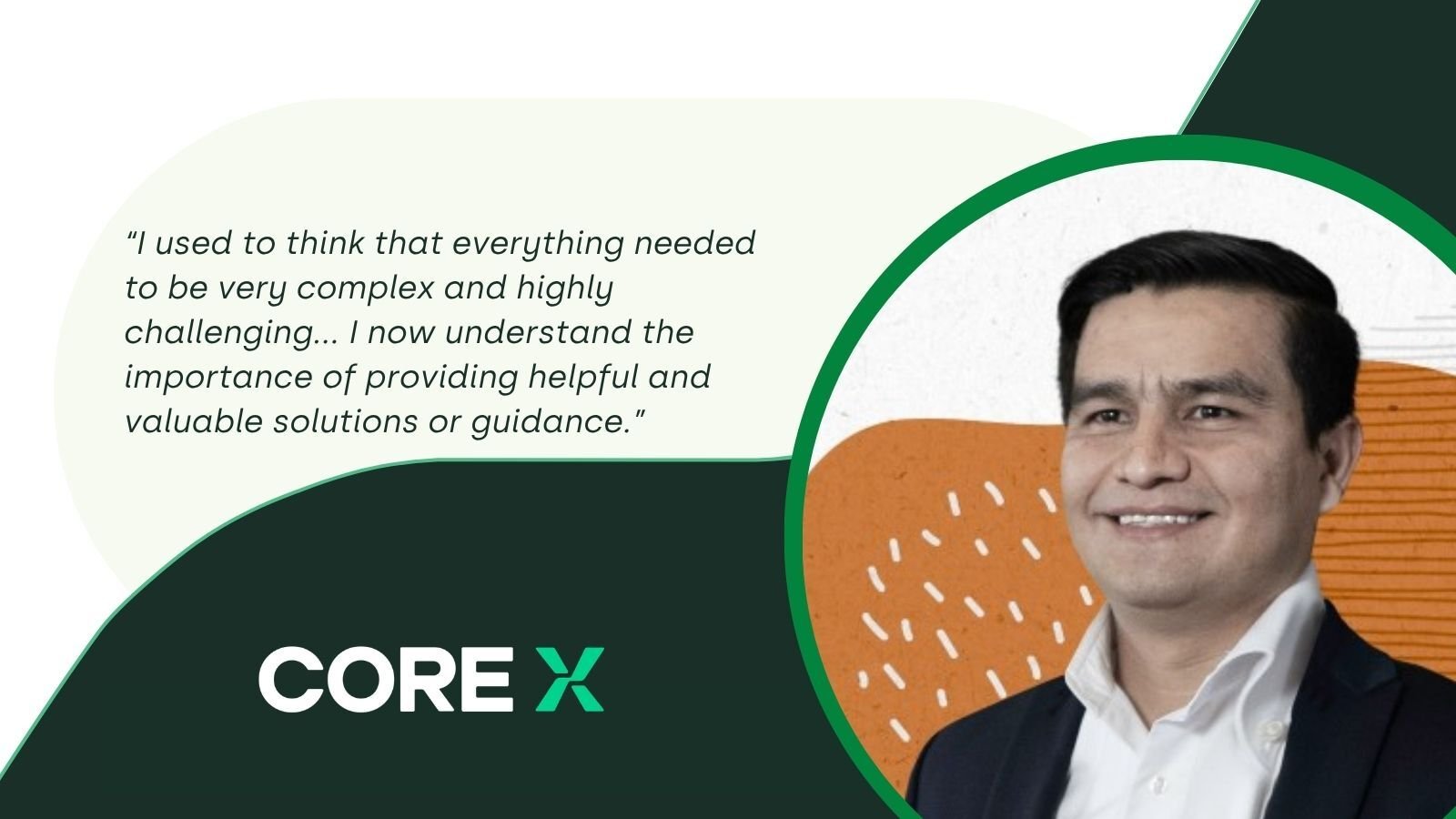
“Ten years ago, I thought everything needed to be highly complex and challenging,” he says. “After becoming a CMA and gaining more experience, I now understand the importance of providing helpful and valuable solutions or guidance, whether you are simply adding a field to a form or writing the most complex script.”
The Quiet Work of a Center of Excellence
This emphasis on value over complexity is not just a personal evolution. It is something that shows up in how CoreX structures its delivery approach, particularly through the work of the Center of Excellence (CoE). While the term itself is often associated with standards and documentation, Mike describes it as something far more active and essential to sustained success.
“A CoE provides standards, delivery guidance, and continuous improvement,” he explains. “But it also owns governance and consistency. It is what keeps delivery aligned with the company’s main objectives.”
A Broader View of Architecture
That alignment becomes increasingly important as ServiceNow expands beyond its traditional boundaries and deeper into enterprise operations. What once may have been contained within a single function now requires coordination across multiple domains, each with its own priorities, data models, and expectations. In that environment, architecture cannot operate in isolation.
“We focus on customer outcomes by delivering the right solution at the right time,” Mike says. “Working with different practice leads, industry experts, and mixed skill sets gives us a broader view. That leads to better solution design.”
As the platform continues to evolve, so does the definition of what “good” architecture looks like. The challenge is no longer just about designing for a specific use case, but also about understanding how decisions in one area ripple across the broader organization, and how those decisions hold up over time.
The Foundation Beneath Everything
That long-term view is especially relevant as organizations begin to incorporate artificial intelligence, data fabrics, and more autonomous workflows into their operations. While these capabilities often dominate the conversation, Mike consistently returns to a more foundational idea.
“Data will become the most valuable asset for companies as AI becomes part of the equation,” he says. “If you have a strong foundation, adopting AI becomes much easier.”
It is a theme that surfaces again when he reflects on what remains underutilized within the platform itself. Even among experienced teams, the fundamentals are not always fully understood or fully realized.
“CMDB and CSDM,” he says. “This is the ITOM guy speaking, but I still see a lot of misunderstanding around the value of a properly implemented data model and CMDB.”
Solving for What Comes Next
In many ways, this is where architecture does its most important work. Not in the visible complexity of advanced features, but in the quieter discipline of getting the underlying structure right, so that everything built on top of it has a chance to succeed.
That same mindset carries into the types of problems Mike finds most rewarding. Rather than focusing on individual technical challenges, he is drawn to the broader picture, where direction and sequencing have the greatest impact.
“I enjoy building roadmaps,” Mike adds. “Identifying and putting together the right pieces in a sustainable sequence around customer needs and outcomes is very satisfying.”
It is a perspective that naturally leads to the kind of advice he offers organizations at the beginning of their ServiceNow journey, before any configuration or development work begins.
“The first step is to have a clearly understood objective and establish a governance model. When you have a clear objective, it is easier to start on the right path, and governance helps you stay on that path without losing focus.”
Beyond the Platform
For Mike, the work itself is only part of what makes CoreX compelling. Just as important is the environment in which that work happens, shaped by a mix of perspectives that extends beyond any single discipline or background.
“Collaboration,” he says. “Having so many different skill sets, cultures, and generations working together makes it a great place to be.”
Outside of that environment, his time is spent in ways that feel both grounded and familiar. He brews beer with his dad and brother, a process that rewards patience and iteration. He reads every day and spends time playing video games and board games with his two sons.
There is a throughline between those worlds, even if it is not immediately obvious. Whether it is building a system, refining a recipe, or working through a long-form story, the satisfaction comes from seeing how individual pieces come together into something cohesive and lasting.
It is the same instinct that defines his approach to architecture. Not just building what is possible, but shaping what will continue to work long after the initial effort is complete.