

CoreX AI Horizon | Digital Workforce
Put an AI Specialist on your service desk.
ServiceNow AI Specialists can take on routine service desk work from assignment through resolution, escalating when human judgment is needed and documenting their actions along the way.
CoreX designs the roles, tools, and guardrails behind them, then validates their performance before they take on production work.

L1 IT Service Desk Challenges
Routine work moves faster than you can hire.
Password resets, access requests, and status checks consume L1 capacity even when the path to resolution is already well understood. Chat can absorb some demand, but requests submitted through forms and email still enter the queue and require someone to handle them.
Challenges include:

Volume outpaces capacity
Requests submitted through forms and email enter the queue directly, leaving L1 teams to handle each one from the beginning.

Forms and email bypass self-service
Requests submitted through forms and email enter the queue directly, leaving L1 teams to handle each one from the beginning.

Automation stops short of resolution
Traditional task automation handles individual actions, while L1 work often requires investigation, execution, communication, and documentation.

Autonomy needs clear boundaries
Permissions, confidence thresholds, and escalation paths define where an AI specialist can act independently and when a person should take over.
AI Agents vs. AI Specialists in ServiceNow
Choose the right level of autonomy for the work.
AI agents and AI specialists are designed for different types of work. CoreX evaluates the workflow, complexity, and risk to determine which approach fits each use case and where human involvement should remain.


Benefits of an Autonomous Workforce: Time, Cost & Experience
More capacity. Measurable ROI.
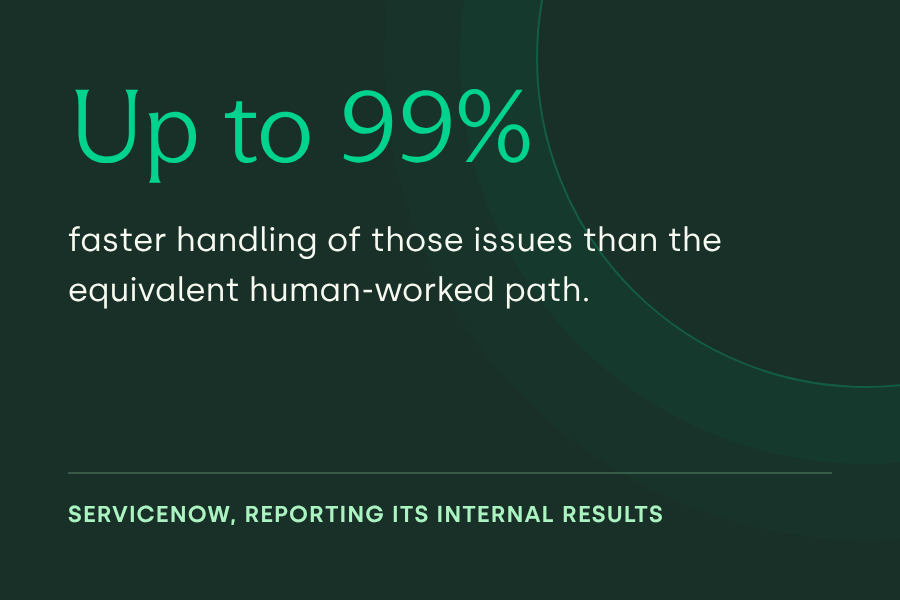
AI Specialists can absorb additional volume as demand grows, increasing service desk capacity while lowering cost per resolution and freeing experienced teams to focus on work that requires human judgment and expertise.
.png?width=900&height=600&name=stat-card-1-autonomous-resolution-900x600@2x%20(1).png)
ServiceNow built FOR RESPONSIBLE AI AUTONOMY
Give every specialist a clear path back to your team.
We define what each AI Specialist can access, which tools it can use, and the confidence required to act. When that threshold is not met, work returns to a person with the research and context already captured, allowing autonomy to expand as performance proves it can.
Scoped Permissions
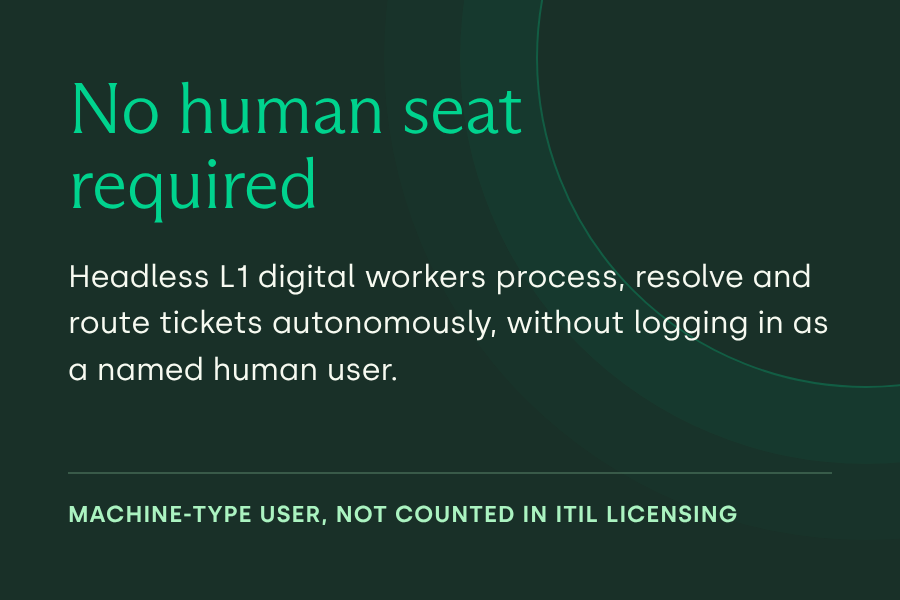
The AI Specialist inherits the roles of its assignment group, giving it access to the same resources as the team it supports.

Confidence and Escalation
High-confidence work can move toward resolution. When confidence falls below the defined threshold, the work returns to the assignment group with relevant research and context attached.
Tracked Evidence
AI Specialist activity is documented through standard reporting and process mining, providing evidence of how work was handled and the outcomes it produced.
Why CoreX: ServiceNow AI Agent Implementation Partner
We make AI specialists ready for real work.
AI Specialists depend on the environment behind them. CoreX configures the search, knowledge, roles, permissions, tools, and confidence thresholds that determine how effectively they operate, then validates that foundation before they take on production work.



WHY COREX for ServiceNow Autonomous Workforce
Results begin with the right configuration
AI Specialist performance depends on the environment around it, including search, knowledge, roles, tools, and confidence thresholds. Getting that foundation right is where implementation experience matters most.
OUR ENGAGEMENT FRAMEWORK:

ORIENT | Opportunity Assessment
We use your incident and request data to identify and prioritize workflows based on volume, repeatability, and potential value.

CHART | Autonomous Agent Design
We define the search, knowledge, roles, permissions, and tools each agent needs to do its job reliably.

EXPAND | Build, Validate and Deploy
We bring the assistant live across channels, connect and improve its knowledge sources, and integrate it with HRIS, ITSM, finance, and collaboration tools.